
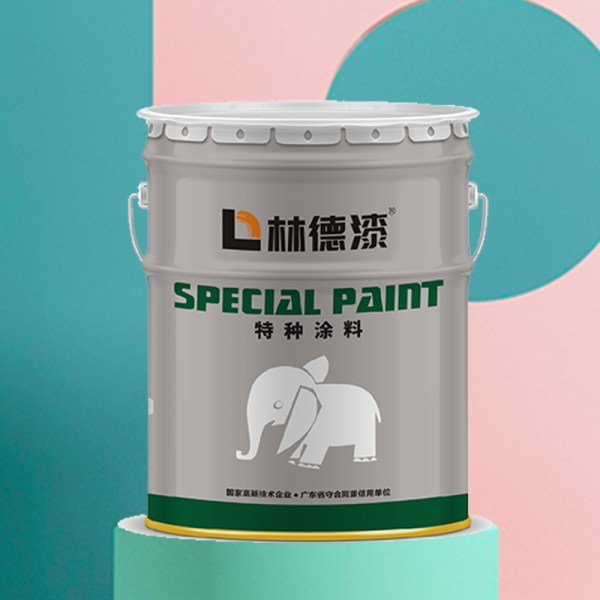
Product Features:
Adopting Linde Waterborne Nano Hollow Glass Microsphere Thermal Insulation System, the solar reflectance and hemispherical emissivity of the reflective topcoat both exceed 0.88, while the thermal conductivity of the thermal insulation midcoat is less than 0.035. It achieves both reflective heat insulation and thermal preservation, with a surface temperature difference of 10-20℃ compared to ordinary decorative surfaces, and a weather resistance and durability period of 10-30 years, delivering obvious economic and social values.

Its working principles mainly include the following three aspects:
1. Reflective Heat Resistance: The system consists of waterborne nano architectural reflective thermal insulation topcoat, waterborne nano hollow glass microsphere thermal insulation midcoat, special primer, and leveling putty. The topcoat highly reflects sunlight with wavelength > 400μm, preventing solar energy from accumulating and heating the building surface, and automatically radiates heat into the external air. Meanwhile, the thermal insulation midcoat blocks energy transfer between indoor and outdoor, ensuring a stable indoor temperature for summer heat insulation and winter warmth preservation. (Invisible light includes infrared light (wavelength 760nm~5300μm) and ultraviolet light (wavelength 290~400μm). The solar constant announced by the World Meteorological Organization (WMO) in 1981 is 1368 W/m². Over 99% of solar radiation at the Earth’s atmospheric boundary falls within the wavelength range of 150~4000μm, with approximately 50% in the visible spectrum, 43% in the infrared spectrum, and 7% in the ultraviolet spectrum.)
2. Phase Change Energy Storage: Phase change energy storage building materials can reduce indoor temperature fluctuations, improve thermal comfort, lower heating and air conditioning energy consumption to a certain extent, and enhance energy utilization efficiency. This product has thermal insulation and energy storage functions. When applied to walls, it effectively reflects solar thermal radiation and exhibits high resistance to heat transfer. The energy storage in the material is composed of special ceramic material infrared photocatalysis. Polymer materials adhere to the inner wall of ceramic beads; when the temperature reaches a certain level, the polymer materials inside the ceramic beads rapidly undergo phase change from powder to gas to absorb a large amount of heat. When the temperature drops, the gas reverts to powder and adheres to the inner wall again. Phase change is utilized to achieve an ideal temperature balance and improve energy efficiency. The application of heat storage and phase change materials in ecological buildings is a new technology for comprehensive resource utilization. Such materials can be used in building components such as floors, walls, and unit structures. When the ambient temperature rises or falls, they absorb excess heat or release stored heat to maintain thermal insulation, keeping indoor temperature stable and comfortable for a certain period. Phase change materials not only significantly improve building energy efficiency, alleviate energy shortages, and enhance living environments but also promote industrial technological progress and development. Currently, phase change energy storage materials for construction have become a research hotspot among scientists and industries worldwide.
3. Microcapsule Technology: It is a technology that uses film-forming materials to encapsulate solids or liquids into micro-particles with particle sizes in the micrometer or millimeter range. Microencapsulated phase change materials (MPCMs) are new composite phase change materials with a core-shell structure, formed by coating the surface of solid-liquid-gas phase change material particles with a stable polymer film. During the phase change process, the core phase change material undergoes solid-liquid transition, while the outer polymer film remains solid, reducing supercooling and phase separation of PCMs. Using microcapsule technology to encapsulate phase change materials as heat transfer media in building materials enables residential buildings to achieve automatic temperature regulation and significant energy savings. These temperature-regulating microcapsules use polymers as wall materials and phase change substances with phase change points near room temperature as core materials. When the ambient temperature exceeds the phase change point, the core material undergoes liquid-solid phase change to release heat and restore its original structure, allowing for cyclic use. During the entire phase change process, the temperature of the core material remains almost unchanged. Utilizing the heat storage and release functions of phase change materials can regulate and control the heat entering the room and its impact on indoor temperature, reducing the mismatch between energy supply and demand in terms of time and speed. Coatings prepared with microcapsules containing phase change materials can enhance the heat storage capacity of buildings, significantly improving the heat storage function of the envelope structure—storing a large amount of heat with a small amount of material. Due to the heat storage effect of the phase change energy storage envelope structure, the fluctuation amplitude of heat flow between indoor and outdoor is reduced, and the action time is delayed, thereby lowering the design load of building heating and air conditioning systems to achieve energy conservation.
This material has been widely used in thermal insulation (composite layer insulation) for internal and external walls, roofing, partition walls, stairwells, ceilings, and other areas requiring thermal insulation in various industrial and civil buildings.


Reviews
There are no reviews yet.